Writing a Simple Business Plan
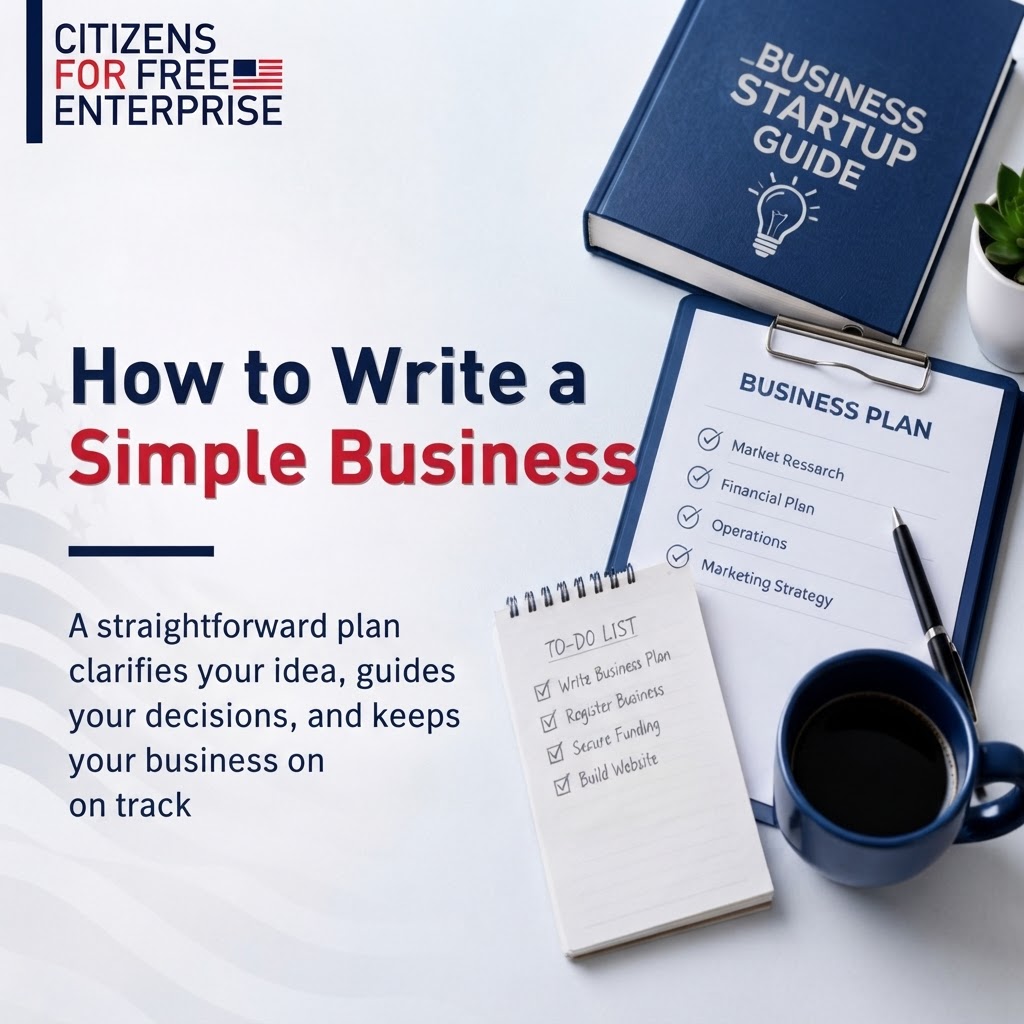
A business plan doesn't have to be long or complicated — it just has to be useful. Even a simple, one-page plan helps you clarify your idea, make better decisions, and stay focused, whether you're seeking outside funding or not.
What Goes Into a Simple Plan
At minimum, every business plan should include a business overview, your target market, your products or services, a marketing approach, basic financial information (startup costs, revenue goals, and expenses), and clear goals. There's no required length — many small businesses do well with a one-page plan, while others need several pages to cover more detail, especially if they're seeking financing. A one-page plan you use is far more valuable than a lengthy one that sits untouched.
Money Matters
Your plan should capture startup costs, monthly operating expenses, a realistic revenue projection, and, if applicable, any funding you're seeking. It's also helpful to note the difference between revenue and profit. One of the biggest mistakes new business owners make is building financial projections on overly optimistic assumptions instead of honest, conservative estimates.
A Working Document
A business plan is a working document, not a contract — it should evolve as you learn more about your customers, costs, and market. Review it at least quarterly, or at any time something significant changes like new competitors, a shift in your target customer, or updated costs.
Get a Second Set of Eyes
A mentor, trusted advisor, accountant, or fellow business owner can offer valuable feedback and catch blind spots you might miss on your own. Local Small Business Development Centers (SBDCs), SCORE, and organizations like Citizens for Free Enterprise offer free templates, checklists, and one-on-one guidance.